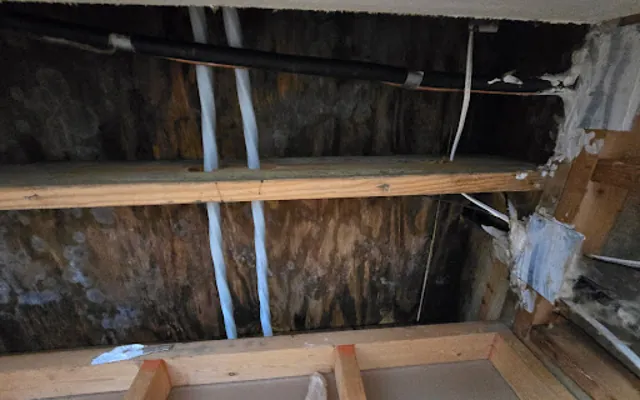
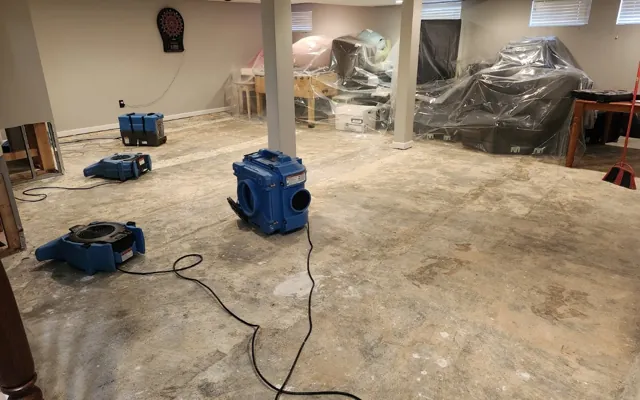
Lake San Marcos winter storms back up gutters, flooding attics. Water wicks into roof framing and wall cavities. Proper drainage prevents mold colonization. Early response prevents costly repairs. Time is critical to prevent exponential spread.

The team removes all debris from gutters and downspouts, ensuring clear water flow. Crews inspect the condition of gutter components, fasteners, and connections. Downspouts are checked for clogs and proper termination away from the foundation.
Crews inspect the attic for water damage, mold colonization, and structural wood condition. Saturated insulation is assessed for treatment or replacement. Commercial dehumidifiers dry the attic over three to five days. Antimicrobial treatments prevent mold.
Crews recommend and install gutter upgrades including increased capacity, improved downspout routing, and gutter guards. New systems include modern materials and proper slope. Crews verify that all water exits away from the foundation. Preventative maintenance plans include regular gutter cleaning.

Roof edge water backup cleanup in Lake San Marcos typically runs $900 to $4,000, depending on how much attic insulation and ceiling drywall near the eave was affected. Gutter clearing and flashing repair add a modest amount. Most homeowners policies cover sudden storm-driven roof leaks the same as any other roof damage claim.
Lake San Marcos homes in the inland valley experience significant winter rainfall that stresses gutter systems designed for lower water volumes. Debris-clogged gutters cannot drain fast enough, causing water to back up onto roofs and under fascia. Water seeps into attics through penetrations and vents, saturating insulation. The inland-valley humidity slows drying. Lake San Marcos winter rainfall can be heavy, overwhelming clogged gutters. Inland-valley humidity slows drying. Mold colonizes readily. Professional intervention is critical to prevent permanent loss. From Lake San Marcos, crews also cover nearby La Costa, Encinitas, Vista, San Marcos, Bonsall, Oceanside. See every neighborhood and town on the full service area page.
See all areas servedEvery loss is photographed, measured, and logged from the first visit, so the paperwork holds up with your insurance carrier.
Technicians follow recognized IICRC drying standards and prove the work with daily moisture readings, not guesswork.
Emergency dispatch any hour of the day or night, with a real crew on the way, not a callback in the morning.
A real crew dispatched any hour, not a callback in the morning.
Trained technicians following recognized IICRC drying standards.
Truck-mounted, portable, and submersible for any size loss.
The loss is documented and billed to the carrier directly.
Lake San Marcos receives significant winter rainfall that delivers large water volumes to roof gutters. Gutters designed for lower rainfall amounts become overwhelmed, especially if clogged with debris. Heavy rainfall that falls faster than gutters can drain causes backup. Adding gutter capacity prevents backup.
Ensure downspouts extend at least six feet from the foundation to direct water away from the home. Avoid downspout termination near the foundation, which allows water to seep into basements and crawlspaces. Install extensions with proper slope so water flows away on the surface. Proper downspout routing is as important as gutter clearing.
Crews are on call 24 hours a day and can be on the way to Lake San Marcos within the hour.
Call (760) 377-0149